1-800-748-6529

Custom Die Cut Corrugated Packaging Built Around Your Product

Sunrise Manufacturing uses rotary corrugated die-cutting to create custom trays, boxes, caps, inserts, and protective packaging components tailored to how your product is packed, handled, and shipped. Instead of forcing a product into a standard box, die-cut corrugated packaging can be shaped to improve fit, speed pack-out, reduce movement, and protect vulnerable edges or surfaces during transit.

Our Rancho Cordova facility supports corrugated die cutting production, while Sunrise’s broader manufacturing network helps serve customers across the U.S. Whether you need a produce tray, branded mailer, die cut cap, interior insert, or custom protective component, our team can help design a corrugated solution that fits your product and shipping process.
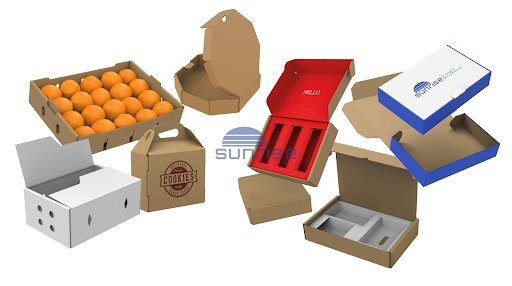
Sunrise Manufacturing corrugated die cut packaging lineup — fruit stand tray, cookie carrier, mailer boxes, gift box with inserts, and branded retail boxes

Die-Cut Trays

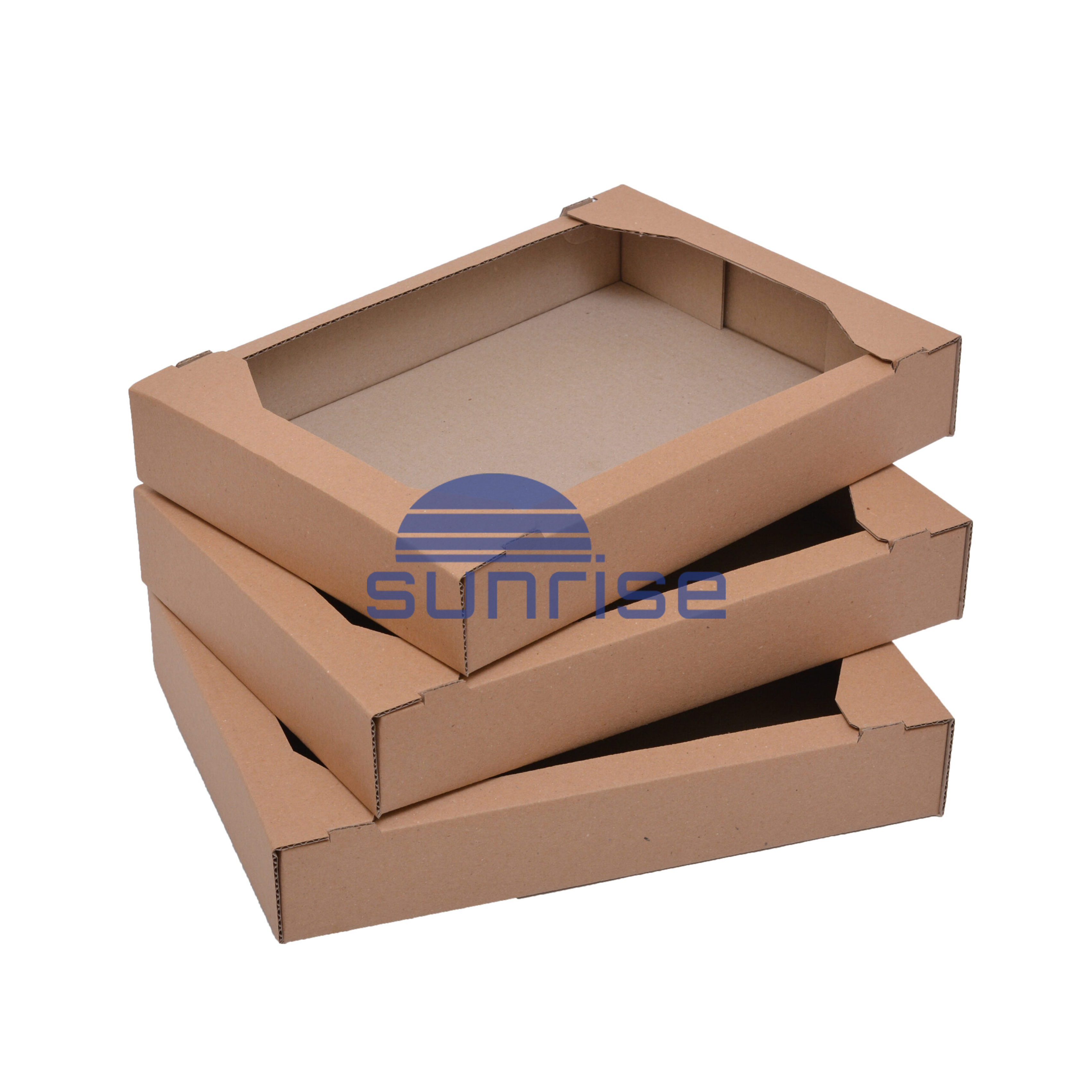
Trays are used to unitize smaller products for ease of handling.  For example: produce, beverages, canned goods, retail goods, and the like. These die-cut trays help to contain, stabilize, and provide additional rigidity for shipment. 

Three stacked open-top kraft corrugated trays with Sunrise Manufacturing branding — die cut packaging product display

Die-Cut Boxes

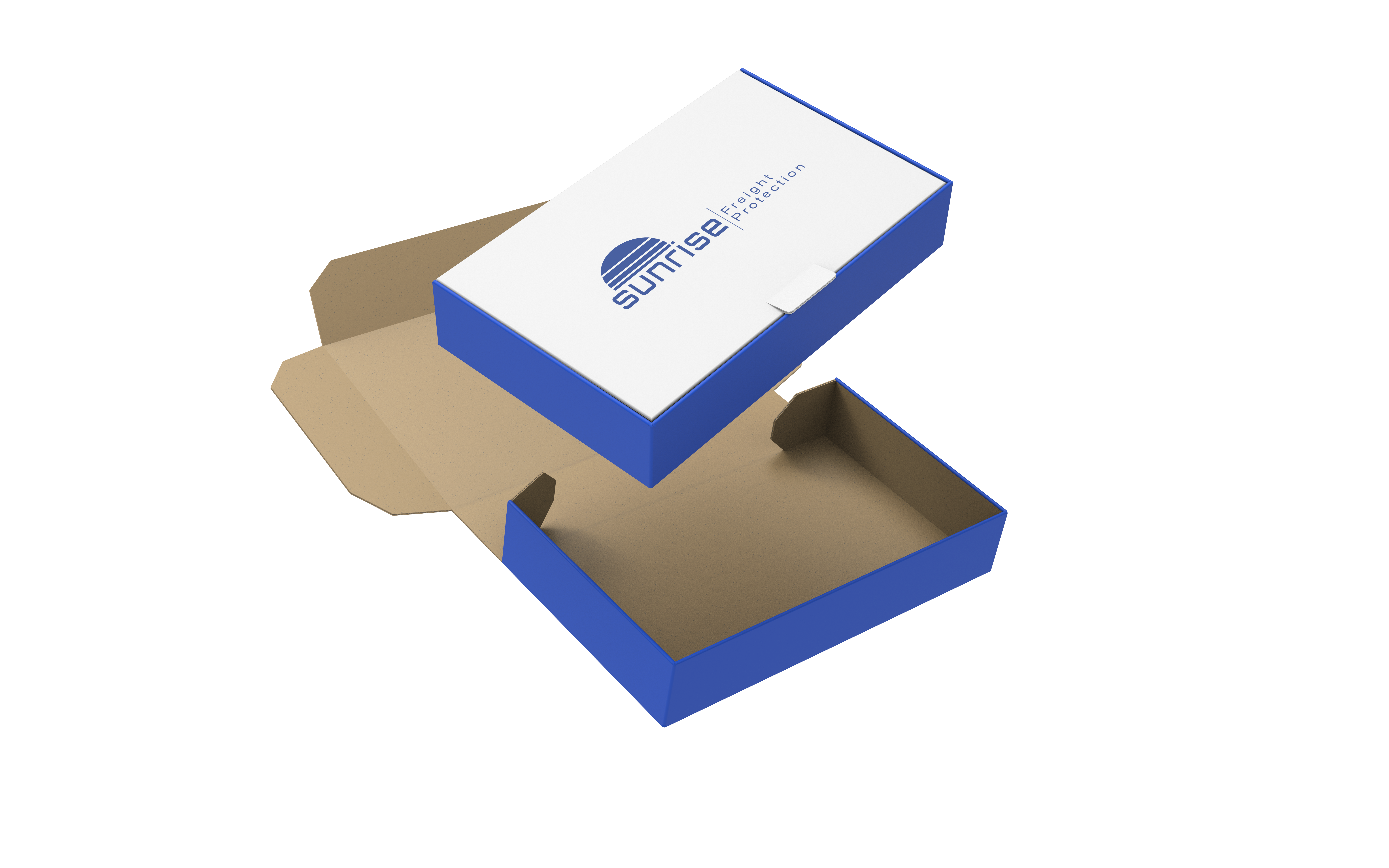
Die-cut boxes are highly customizable. They can be designed to fit any shape, size, or need. These die-cut corrugated boxes are shaped to fit your specific product, reducing packaging waste and providing an optimal container for your product shipment.

Open Sunrise Freight Protection branded blue corrugated die cut mailer box showing white lid with logo and kraft interior tray

Die-Cut Caps

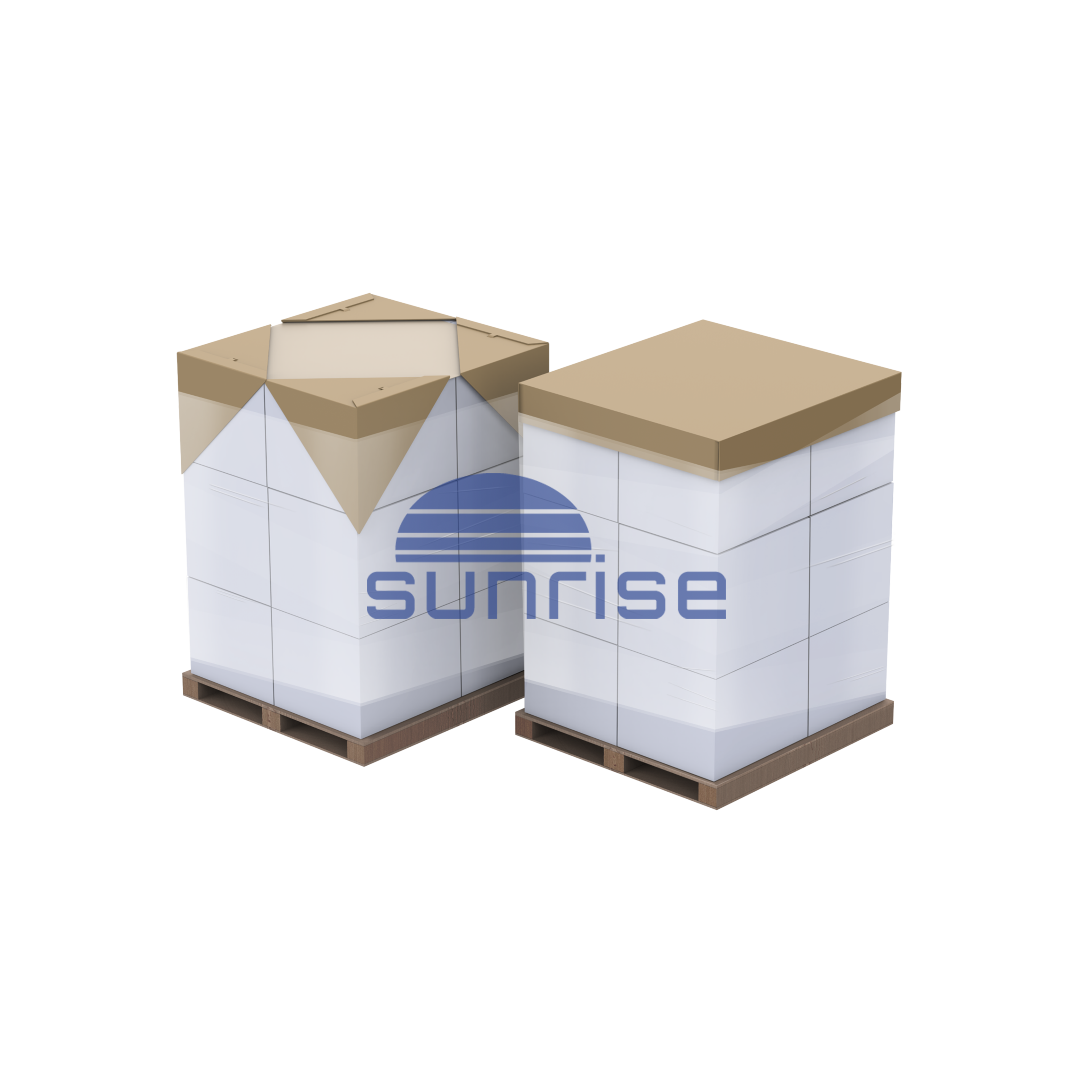
Top caps, along with corner caps, help better unitize and palletize a product for warehousing and shipping. These die-cut options can be fully customized based upon your requirements.

Two palletized loads protected by Sunrise corrugated corner protectors and top caps — one being applied (left) and one fully secured (right)
Die cut corrugated cardboard box templates and folded sample boxes on a cutting machine bed

When Should You Use Corrugated Die Cutting?

Use corrugated die-cutting when standard packaging results in excessive movement, excessive waste, or excessive handling time.

Common reasons to choose die cut corrugated packaging include:

  • Your product has an unusual shape or fragile edges
  • Standard boxes require too much filler
  • Packing teams need a faster, repeatable process
  • Products need separation inside the carton
  • You need trays, caps, inserts, or retail-ready formats
  • Freight damage keeps showing up in the same place
  • The product needs better pallet stability or stacking support

Turn to Sunrise Manufacturing to Create Your Perfect Die-Cut Packaging

Whether you have a unique product and need a specially designed box or you need a customized display, Sunrise Manufacturing’s corrugated die cutting has you covered. Since our corrugated materials are 100% recyclable and sustainably sourced, any option you choose will be an eco-friendly solution.

If you are ready to design your corrugated die cutting product, contact our team today!

FAQs About Corrugated Die Cutting

Corrugated die cutting is the process of cutting corrugated board into specific shapes using a custom die. It is commonly used to create trays, boxes, caps, inserts, dividers, and custom packaging components.

Common products include die-cut trays, die-cut boxes, top caps, corner caps, inserts, dividers, partitions, retail displays, and custom corrugated components.

Use die-cut corrugated packaging when your product needs a better fit, faster pack-out, added separation, retail-ready presentation, or more targeted protection than a standard box can provide.

They can be, depending on the product. Die-cut boxes are best when the package needs custom folds, locking features, product-specific fit, or a presentation-focused design.

Yes. Sunrise can help prototype custom die-cut packaging, so fit, pack-out speed, and performance can be reviewed before full production.

Helpful details include product dimensions and weight, photos, current packaging, damage history, desired quantity, shipping method, and whether the design requires trays, boxes, caps, inserts, or other components.